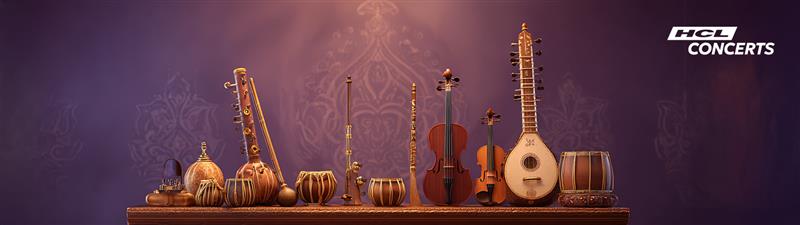
10 Instruments in Carnatic Music and Their Role in Classical Concerts
2025-10-06Ever wondered what creates that magical spell during a Carnatic music concert? Imagine you’re sitting in a dimly lit auditorium, and suddenly, the air fills with melodious sounds that seem to transport you to another realm. What you’re experiencing is a beautiful symphony created by multiple instruments in Carnatic music working together in perfect harmony.
Carnatic music stands as one of India’s most treasured classical traditions, where each instrument plays a unique role in creating an unforgettable musical journey. From the soulful strings of the violin to the rhythmic beats of the mridangam, every instrument contributes its own voice to the grand conversation that unfolds on stage.
Join us as we explore the 10 magnificent instruments that form the backbone of Carnatic concerts, each bringing its own character and charm to create those unforgettable moments that will stay with you forever.
The Role of Instruments in Carnatic Concerts
In a Carnatic concert, instruments are far more than accessories. They are storytellers, companions, and sometimes even protagonists. Imagine a concert where the veena’s serene notes intertwine with the energetic beats of the mridangam, setting a rhythm that moves your feet and touches your heart. Instruments define the pace, mood, and character of the music.
- They provide melodic support, reinforcing the vocalist’s journey through ragas.
- They create rhythmic scaffolding, giving the tala structure and pulse.
- They allow for improvisation, enabling artists to showcase their creativity while remaining rooted in tradition.
- They interact dynamically with the audience, making each concert a unique experience.
Through these instruments, Carnatic concerts become immersive experiences- where every note and rhythm evokes emotions ranging from devotion to joy and serenity to exhilaration.
The 10 Key Instruments in Carnatic Music
Mridangam
The mridangam is the heartbeat of Carnatic music. This double-headed drum establishes the tala (rhythmic cycle) and sets the tempo for the concert. The intricate patterns of hand strikes create textures that are mesmerising and energetic.
Crafted from jackfruit wood and stretched with goatskin, the mridangam produces an incredible range of sounds. The right side gives crisp, high-pitched notes, whilst the left side produces deep, resonant bass tones. This combination enables mridangam players to create intricate rhythmic patterns that can quicken your pulse with excitement.
Listening to a skilled mridangam artist like Palghat Mani Iyer is a masterclass in rhythm, showcasing how a percussion instrument can converse with melody. It beats anchor improvisation, highlights transitions, and intensifies the emotional pull of each raga.
Veena
The veena is perhaps the most classical symbol of the Carnatic tradition. With its wide resonance and delicate strings, it produces a deep, meditative sound that has adorned temples and royal courts for centuries.
The veena enables both elaborate improvisation and intricate Gamakas (ornaments), thereby enhancing the devotional or emotional layers of a composition. Playing the veena is both art and devotion, capturing the serene and majestic essence of Carnatic music.
The instrument’s four main strings and three drone strings create rich harmonic textures. Master veena players can make single notes sing with emotion, demonstrating why this instrument is often chosen for solo recitals where its subtle beauty can be fully appreciated.
Flute (Venu)
The Venu or Carnatic bamboo flute offers a breathy, lyrical voice that can evoke gentle landscapes or intense devotion. Its soft timbre and expressive pitch bends allow it to convey the mood of ragas in a profoundly human way.
Flautists like T.R. Mahalingam have demonstrated how the flute can communicate emotion, mimic vocal nuances, and bring audiences into a dreamlike state, making it a favourite in both solo and ensemble performances.
During jugalbandi (duet) concerts, the flute creates fascinating conversations with other instruments, its flowing melody lines weaving seamlessly with violin phrases or dancing playfully with mridangam rhythms.
Ghatam
The ghatam is a clay pot transformed into a percussion instrument, producing metallic, earthy sounds that add unique textures to concerts. Played with fingertips and palms, its tones range from subtle whispers to sharp, resonant strikes.
In Carnatic concerts, the ghatam typically appears during percussion ensembles alongside the mridangam. Its earthy, organic sound provides textural contrast to the sharper sounds of other percussion instruments. The interplay between ghatam and mridangam creates rhythmic conversations that showcase the mathematical precision underlying Carnatic rhythm.
The ghatam complements the mridangam, enhancing rhythmic intricacies and engaging audiences with its playful yet precise patterns. Listening to a skilled ghatam artist is a journey through layers of rhythm and timbre.
Violin
The violin in Carnatic music is much more than an accompaniment. It’s a voice that mirrors the vocalist’s soul. Introduced into Carnatic concerts in the 19th century, the violin now carries melodic weight, echoing the raga with precision and emotion.
What makes the Carnatic violin unique is its adaptation to Indian classical music. Unlike Western classical music, where violins are held under the chin, Carnatic violinists rest the instrument against their chest and shoulder, allowing for the intricate microtonal ornamentations that define Indian classical music.
The bow dances on the strings to create fluid lines, capturing both subtle nuances and dramatic flourishes. Notable artists like Padma Vibhushan awardee L. Subramaniam have elevated the violin to virtuoso levels, making it indispensable in concerts today. Its versatility allows for both delicate, reflective passages and soaring, expressive climaxes.
Kanjira
The kanjira is a small frame drum that adds sprightly accents to percussion ensembles. Often accompanying the mridangam, it can create astonishingly complex rhythmic phrases despite its compact size.
Made from monitor lizard skin stretched over a wooden frame, the kanjira requires incredible technique to master. Players use their fingers, palms, and even knuckles to create different sounds while simultaneously manipulating the drum’s tension to produce pitch variations that complement melodic passages.
Artists like G. Harishankar have elevated the kanjira from an accompaniment instrument to one of brilliance. Its crisp, resonant sounds punctuate concerts, driving energy and excitement.
Morsing
The morsing, a type of jaw harp, produces twanging, rhythmic undertones that enhance the percussion ensemble. Often paired with mridangam and kanjira, it creates intricate rhythmic interplay that adds depth and subtlety.
Though small and unassuming, the morsing’s role is vital- linking melody and rhythm while enriching the concert’s sonic tapestry. The morsing requires tremendous breath control and oral dexterity. Master players can create rapid-fire rhythmic patterns that seem to dance in the air, adding an element of virtuosic display that consistently impresses audiences.
Nadaswaram
The Nadaswaram is a powerful, double-reed wind instrument traditionally played in temples and on festive occasions. Its booming, resonant tones are celebrated for their auspicious quality. Nadaswaram performances can evoke divine presence, heightening the spiritual atmosphere of concerts.
Traditionally associated with temple music and auspicious occasions, the nadaswaram has found its place in concert settings, where its majestic sound lends a regal character to Carnatic presentations. The instrument’s incredible volume and emotional range make it perfect for expressing both devotional fervour and subtle melodic nuances.
Artists like T.N. Rajarathnam Pillai have immortalised its significance, demonstrating its ability to convey both grandeur and devotion in Carnatic music.
Thavil
The Thavil is the perfect companion to the nadaswaram, offering dynamic, percussive brilliance. Its loud, vibrant beats create an energetic backdrop, particularly in temple processions and ceremonial music.
Crafted from jackfruit wood and featuring different tensions on each drumhead, the thavil creates complex rhythmic patterns that showcase the mathematical precision underlying Carnatic music.
The right hand uses a thin stick for crisp, high-pitched patterns, whilst the left hand produces deep bass tones. The Thavil’s powerful rhythms not only support melody but also captivate listeners, adding drama and excitement to every performance.
Tambura (Tanpura)
The tambura provides the harmonic drone that forms the foundation of Carnatic music. This simple yet profound instrument continuously resonates with the tonic note, creating a sonic canvas for melody and rhythm to unfold.
The tambura’s role might seem simple- just plucking strings in sequence. But its impact on the music’s overall effect is profound. Without this harmonic anchor, the intricate melodic explorations of Carnatic music would lose their context and emotional grounding.
The tambura’s sustained drone enhances the raga’s mood, making every note more expressive and meditative. Though it doesn’t play melodies, its presence is indispensable in creating the immersive, soulful atmosphere of Carnatic concerts.
Conclusion
Carnatic concerts are a thread of melody, rhythm, and emotion, and instruments are the threads that bring it to life. From the lyrical charm of the violin to the powerful pulse of the mridangam, from the meditative veena to the jubilant nadaswaram, each instrument contributes a unique voice to the collective harmony.
Whether in a grand HCL Concerts Hall or an intimate Baithak setting, these instruments transport you to a world where tradition meets expression, devotion meets artistry, and every note resonates with centuries of heritage.
Experiencing Carnatic music is not just about listening but about feeling, witnessing, and participating in a living art form. So, immerse yourself in the magic, celebrate these instruments, and let the timeless melodies of Carnatic concerts hit you right in the feels.