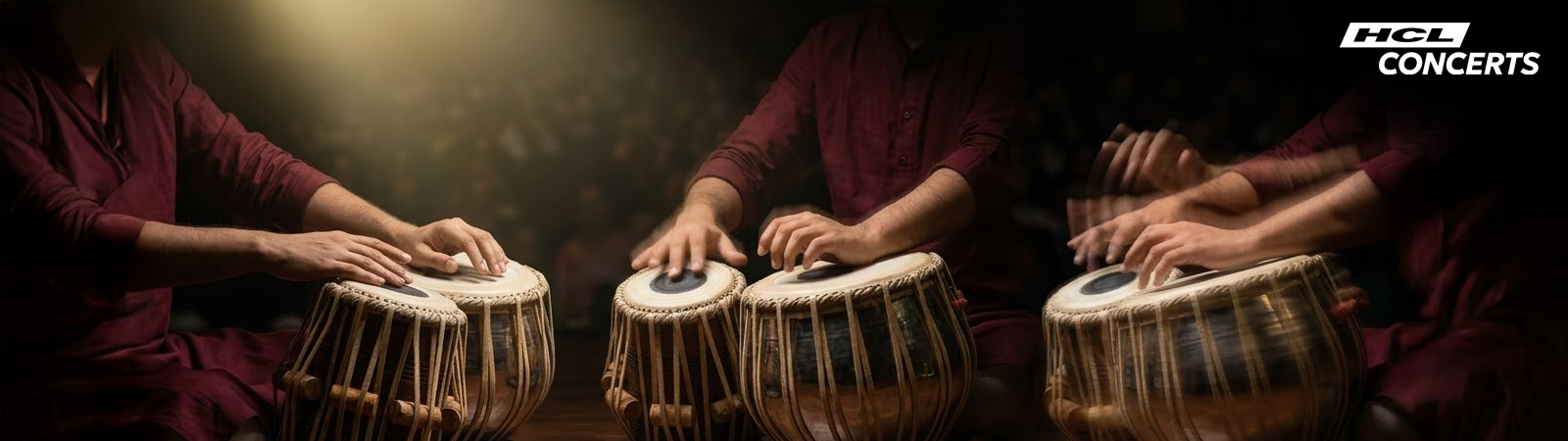
Understanding Laya – The Tempo that Drives Classical Music
2026-03-16Ever wondered why some performances of Laya stay with you long after the last note fades? Why does one alaap feel like a calm sunrise, while another composition feels like a celebration in motion? The answer lies in the invisible pulse that guides every note – the rhythm within the rhythm.
In Indian classical music, Laya is the breath of the composition. It is what allows a raag to unfold slowly like a blooming lotus or sparkle with energetic brilliance. Whether you are listening to a soulful khayal or an energetic tabla solo, the tempo in classical music shapes how you experience every emotion.
At HCL Concerts, where every performance celebrates the spirit of classical music, you often witness how artists use Laya to create magic on stage. From meditative openings to breathtaking, fast-paced finales, this journey of tempo transforms a performance into an unforgettable experience. So, let us step into this fascinating world and discover how Laya quietly becomes the heartbeat of every musical masterpiece.
What is Laya in Indian Classical Music?
Laya is like the flow of time within music. Just as your heartbeat keeps your body in rhythm, Laya keeps a musical performance alive and moving. Without it, even the most beautiful notes would feel scattered. In simple words, Laya refers to the consistency of speed in a performance. It ensures that every note, every pause, and every improvisation stays connected.
Imagine a vocalist presenting Raag Yaman. The slow opening allows you to absorb each note. As the performance progresses, the pace changes, bringing new energy. Here, the Laya guides this journey. Great maestros like Pt. Bhimsen Joshi and Ustad Zakir Hussain have often demonstrated how mastery over tempo transforms a performance from technical brilliance into emotional storytelling. When you notice Laya, you feel its movement.
Types of Laya in Classical Music
Every performance in the Indian classical tradition moves through different speeds. These variations create contrast, emotion, and excitement. Understanding these types helps you appreciate how artists build a musical journey. Let us explore the three primary types of Laya that shape a performance.
Vilambit Laya (Slow Tempo)
It is a slow, expansive, and deeply expressive Laya. It allows the artist to introduce the raag with patience and grace. When a vocalist explores Raag Darbari Kanada in a slow tempo, each note feels deliberate. Each phrase carries depth and is slow. In this space, artists showcase their control over microtones and emotional nuance. The tabla enters gently, maintaining a spacious rhythmic cycle.
Madhya Laya (Medium Tempo)
Madhya Laya brings balance. It is neither too slow nor too fast. This is where compositions feel structured and accessible. Many bandish compositions are presented in this tempo because it allows both technical display and emotional connection. You might notice how the interaction between the vocalist and tabla becomes more conversational here.
This is often the part of a concert where audiences begin to nod along.
Drut Laya (Fast Tempo)
Drut Laya introduces speed, energy, and virtuosity and is often the climactic section of a performance. Here, you may witness rapid taans from the vocalist or dazzling tabla patterns that leave audiences in awe. The pace increases, but the control remains absolute. Imagine the electrifying finale of a sitar recital where the artist moves into a fast gat.
The Relationship Between Laya and Taal
If Laya is the flow of time, Taal is the framework that holds it together. Taal is like the structure, and Laya is the movement within that structure. Taal defines the number of beats in a rhythmic cycle. Laya determines how fast or slow those beats move. Together, they create rhythmic harmony.
For example, Teentaal has sixteen beats. Whether it is performed slowly or quickly, the structure remains the same. What changes is the Laya. This relationship becomes especially fascinating in jugalbandi performances, where artists play with tempo while staying anchored to the rhythmic cycle. You might notice how a tabla player subtly increases intensity while maintaining the taal framework.
Why Laya is Important in Classical Music Performances?
Why does tempo matter so much? Because it shapes how you feel the music. Laya helps artists build emotional progression. A performance rarely begins with high energy; slowly it unfolds gradually, allowing you to connect with the raag before experiencing its full intensity.
Laya also demonstrates an artist’s training. Maintaining a steady tempo during improvisation requires immense discipline. This is why gurus emphasise Laya practice from the earliest stages of learning. In concerts, you may notice how audiences respond instinctively to tempo changes. Slow passages invite silence and reflection. Faster passages bring applause and excitement.
Laya also helps coordinate between performers. Vocalists, instrumentalists, and percussionists rely on this shared sense of timing to create seamless collaboration. Without Laya, there is no sound, and with Laya, there is experience.
Laya in Live Classical Music Concerts
During a live performance, artists often naturally adjust the tempo in response to the audience’s energy and the flow of the presentation. A slow vilambit section may create complete silence in the hall. At the same time, a fast, dynamic composition often elicits visible excitement and appreciation from listeners.
You may also notice how musicians communicate through tempo on stage. A tabla player may subtly increase intensity, while the vocalist responds with faster improvisations. This interaction creates a dynamic experience that feels spontaneous yet perfectly controlled.
Music festivals and traditional baithaks especially highlight how different artists approach tempo differently. Some performers focus on deep, slow exploration, while others emphasise rhythmic play and speed transitions. Experiencing this in person helps you understand that Laya is about feeling movement, tension, and release in real time. This is what makes live classical performances truly immersive and unforgettable.
The Path to Mastering Laya in Music
Mastering Laya is not just about speed; it’s also about awareness. Students begin with simple exercises. Clapping basic taals, practicing with a metronome, and repeating patterns until timing becomes instinctive. Gurus often encourage practising with a tanpura and tabla accompaniment to develop internal rhythm. Over time, students learn to maintain tempo even during complex improvisations.
Listening is equally important. When you attend performances or listen to legends, you absorb timing subconsciously. You begin to recognise how masters maintain stability even during the most complex passages. Many artists say that true mastery comes when you no longer count beats consciously. You begin to feel them.
Patience plays a key role. Developing rhythmic maturity takes years. Yet every small improvement brings confidence. If you are a listener, you can develop this awareness too. Try tapping gently along during a concert. Notice transitions between slow and fast sections. You will soon realise that rhythm is something you can learn to feel, not just hear.
Conclusion
Laya is the invisible thread connecting structure, emotion, and expression. When you begin to recognise it, every performance feels richer. You notice how artists shape time. You sense how emotion grows through rhythm. You appreciate the discipline behind spontaneity. This is the beauty of the Indian classical tradition. It teaches you that music is not just melody. It is timing, patience, and flow.
At HCL Concerts, this philosophy comes alive through carefully curated performances that celebrate heritage while welcoming new listeners. Whether you are discovering your first raag or have loved this tradition for years, every concert becomes an opportunity to experience rhythm in its purest form.
So, the next time you attend a performance, listen closely. Feel the slow unfolding. Enjoy the rising energy. Let the rhythm guide you. Because when you understand Laya, you do not just listen to music. You begin to travel with it.