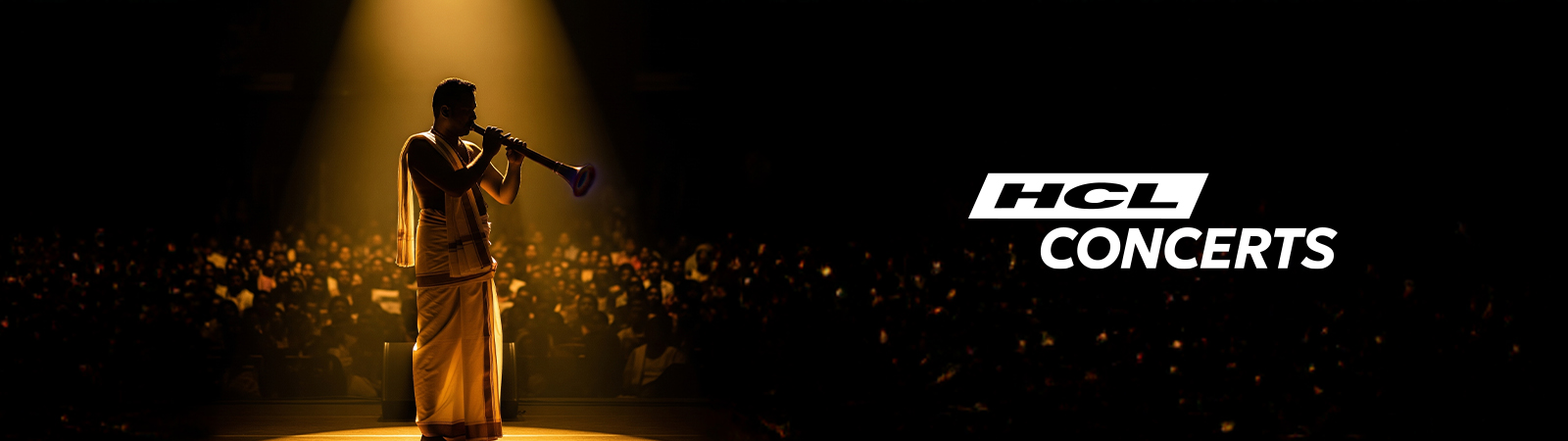
Nadaswaram: An Endangered Yet Iconic Classical Instrument
2026-06-15The Nadaswaram, also known as Nagaswaram, is one of the most unique and powerful wind instruments of South India. Often called the “king of instruments” in the Carnatic tradition, it belongs to the family of Indian classical music instruments that have a strong and deep sound, filled with energy. It is played in pairs and goes along with thavil – pair of drums. You can hear it in temples, processions, and weddings where its presence is believed to bring prosperity and joy. The importance of Nadaswaram goes far beyond entertainment. It represents faith, community, and culture.
Yet, despite its fame, the art of playing Nadaswaram is slowly fading away. Many young people no longer take up this classical instrument. Masters who carry generations of knowledge find fewer students ready to continue the legacy. Instrument makers also struggle to survive. In this article, we will take a look at the Nadaswaram’s history, its cultural role, its unique features, and its place in Carnatic music. We will also understand why the art form is endangered today and what steps can be taken to preserve it for the future.
Historical and Cultural Significance
The Nadaswaram has existed for centuries. Early Tamil literature, especially the great text Silappatikaram, describes instruments similar to it. Over time, the Nadaswaram became a part of daily cultural and religious life in South India. In Hindu temples, the Nadaswaram has been played during important rituals for many generations. It is one of the Mangala Vadyams, or auspicious instruments, which means it is believed to bring good fortune whenever it is played. This belief made Nadaswaram an essential part of temple ceremonies, processions, and grand festivals.
It is also strongly linked to wedding rituals. In Tamil Nadu and across the Tamil diaspora, a wedding without the Nadaswaram feels incomplete. Its sound is thought to welcome divine blessings into the union. For many families, the memories of a wedding ceremony begin with the rising notes of the Nadaswaram mixed with the beats of the thavil drum. In this way, the instrument is not only a tool of music but also a living thread that binds together rituals, festivals, and personal milestones.
Unique Features of the Nadaswaram
What sets the Nadaswaram apart is its design, sound, and playing style. Some of its most important features are:
- Structure and tone: The Nadaswaram is a Carnatic music instrument with a double reed and a long conical bore. The bore widens at the bottom to form a bell, which gives the instrument its powerful and far-reaching tone. The double reed vibrates when air passes through it, producing a rich, resonant, and expressive sound with a distinctive timbre that allows the instrument to project clearly in open spaces and large gatherings.
- Material: The body is usually made from strong wood, often from the aacha tree. Other materials like sandalwood, ebony, and even bamboo have also been used. The bell may be crafted from bronze, copper, or other metals.
- Reed and craftsmanship: The reed is delicate and hand-made, requiring great skill to prepare and maintain.
- Finger holes: It has seven main finger holes and five extra holes at the bottom. The extra holes are normally covered with beeswax, allowing musicians to fine-tune the pitch. This makes the instrument very flexible in producing notes.
- Range: Nadaswaram can cover about two and a half octaves. Players depend not just on finger movements but also on breath control and airflow, which add richness and expression.
- Volume: Loudness is one of its defining traits. Unlike softer classical instruments, the Nadaswaram is best enjoyed in large spaces. Its sound can fill temple courtyards, open streets, and wedding halls without the help of microphones.
Role in Carnatic Music
In the world of Carnatic music, the Nadaswaram is one of the most respected instruments. It is celebrated for its ability to bring out the depth and emotional richness of ragas. Known for its powerful tonal range and expressive capabilities, the instrument can effortlessly handle slow, devotional compositions as well as fast, intricate passages, making it a complete concert instrument. Ragas such as Kalyani, Bhairavi, Shankarabharanam, Todi, Kambhoji, and Hamsadhwani are particularly associated with memorable Nadaswaram performances and showcase the instrument’s ability to convey both grandeur and subtle emotion.
The thavil, a double-headed drum, often accompanies the Nadaswaram. Together, they create an energetic and rhythmic combination that has become synonymous with South Indian temple traditions and festive celebrations. The sound of the Nadaswaram, supported by the dynamic beats of the thavil, can transform the atmosphere of any gathering. Another accompanying instrument, the ottu, provides a continuous drone that helps maintain tonal harmony.
The instrument’s legacy has been shaped by legendary maestros such as T.N. Rajarathinam Pillai, often regarded as one of the greatest Nadaswaram exponents, and Sheik Chinna Moulana, who played a significant role in popularising the instrument across generations. Other renowned artists, including Karukurichi Arunachalam and Namagiripettai Krishnan, further elevated the stature of the Nadaswaram through their distinctive styles and remarkable command over ragas.
Over time, the Nadaswaram has extended beyond temple premises and traditional ceremonies. It has found a place in concert halls, radio broadcasts, and recordings, influencing generations of Carnatic musicians. Many celebrated vocalists and instrumentalists have drawn inspiration from the improvisational techniques, phrasing, and musical depth demonstrated by great Nadaswaram maestros.
Symbolism and Spiritual Association
For many people, the Nadaswaram is not just music; it is a bridge to the divine. The sound is believed to invite gods into the space where it is played. It signals purity and auspiciousness. Musicians often treat their instruments with deep respect. The making of a Nadaswaram itself is considered sacred. Some even perform rituals before playing in temples or at important events. In religious settings, the Nadaswaram has a unique role. It rises above chants, bells, and conch sounds, creating an atmosphere that feels larger than life. Its piercing yet sweet tone is thought to carry prayers to the heavens. This spiritual link is one of the main reasons why Nadaswaram remains a symbol of devotion and celebration.
Nadaswaram vs Other Classical Instruments
When we compare the Nadaswaram with other classical instruments, its uniqueness becomes clear. The flute, for example, has a soft and gentle sound, while the Nadaswaram has a bold, commanding voice. Where the flute suits quiet halls, the Nadaswaram fills open spaces with ease.
Compared to the veena, a string instrument, the Nadaswaram demands far greater physical effort. A veena player plucks strings with precision, but a Nadaswaram artist needs powerful lungs and strict breath control to sustain notes.
If we look at instruments like the Mridangam or Tabla, they set rhythm rather than melody. The Nadaswaram, on the other hand, carries the main tune and leads performances in many traditional settings.
| Instrument | Key Features | How It Differs from Nadaswaram |
|---|---|---|
| Flute | Soft, gentle sound; suits quiet halls | Nadaswaram is bold, commanding, and fills open spaces with ease |
| Veena | String instrument; precise plucking | Nadaswaram requires powerful lungs and strict breath control |
| Mridangam / Tabla | Percussion instruments; set rhythm | Nadaswaram carries the melody and leads performances |
| Hindustani Instruments (Sitar, Sarod, Bansuri) | Subtle, intimate expressions | Nadaswaram is strong, festive, and deeply spiritual |
| Shehnai | Mellow tone; suited for gatherings | Nadaswaram produces greater volume and intensity, filling large spaces without amplification |
In Hindustani music, instruments such as the Sitar, Sarod, or Bansuri lean towards subtle and intimate expressions. By contrast, the Nadaswaram, though present in both Carnatic and South Indian instrument music, creates a sound that is strong, festive, and deeply spiritual.
Even when compared to the Shehnai, which is considered its North Indian cousin, the Nadaswaram stands apart. The shehnai has a mellow tone suited for smaller gatherings, but the Nadaswaram produces a volume and intensity that can fill vast temple courtyards and wedding halls without amplification.
Why Is the Art of Nadaswaram Becoming Endangered?
Even though Nadaswaram has a rich past, its future looks uncertain. There are many reasons for this.
- High cost of instruments: A well-crafted Nadaswaram is expensive, and reeds require constant care and replacement, making it hard for young musicians to afford.
- Decline in skilled teachers: Many masters are ageing, and fewer youngsters are willing to dedicate years to mastering this demanding classical instrument.
- Shift to modern instruments: In cities, students often choose globally popular instruments like the guitar or keyboard over the Nadaswaram.
- Practical challenges in urban life: The Nadaswaram’s loudness makes it unsuitable for practice in small apartments, unlike a flute or violin.
- Lack of recognition and financial support: Singers and violinists get more stage opportunities, while Nadaswaram players are mostly restricted to temple festivals and weddings.
- Limited exposure in mainstream media: Unlike other instruments, Nadaswaram performances are rarely broadcasted on television, radio, or streaming platforms, reducing public interest.
- Fewer performance opportunities outside traditional settings: Concert halls, colleges, and cultural festivals often prefer modern or more versatile instruments, leaving Nadaswaram artists with fewer platforms.
- Cultural shift among younger generations: Many youths see the instrument as old-fashioned or too complex to learn, leading to declining student enrolment.
Steps We Can Take to Preserve the Nadaswaram Tradition
The future of the Nadaswaram is dependent on collective effort. Here are a few meaningful steps we can take to preserve this beautiful tradition:
- Education and awareness: Schools and colleges should introduce the Nadaswaram in their music programmes. Awareness campaigns can help young people understand the value of this tradition.
- Support for musicians: Financial grants, scholarships, and fellowships can encourage students to take up the instrument. Providing support for living costs while learning will also motivate more learners.
- Instrument making: Skilled makers should be supported so that high-quality instruments remain available. Training new generations of craftsmen is vital.
- Public concerts: Organising concerts in urban centres can showcase the beauty of the Nadaswaram, which will not be confined just to temples and weddings. Collaborations with modern music genres can also attract younger audiences.
- Media promotion: Recordings of great masters should be preserved and promoted through radio, television, and digital platforms. Social media can also bring global attention to this Carnatic music instrument.
- Cultural festivals: Competitions and festivals that lay focus on the Nadaswaram can give it a platform to shine. Celebrating the instrument publicly adds to its prestige.
Conclusion
The Nadaswaram is more than a musical tool. It is a cultural symbol, a sacred sound, and a proud part of Indian Classical Music. From temple rituals to wedding ceremonies, it has been present at life’s most auspicious events. Its powerful tone carries history, devotion, and emotion in every note. However, the decline in students, high costs of instruments, and lack of recognition are pushing it towards becoming endangered. If action is not taken, future generations may only know it from recordings or old stories. Preserving Nadaswaram is not only the responsibility of musicians. It is equally for people who value culture and tradition. By encouraging young learners, supporting craftsmen, promoting performances, and spreading awareness, we can preserve this instrument and secure its future, passing it on to newer generations to come. Let the voice of the Nadaswaram continue to rise in our temples, festivals, and hearts for centuries to come.