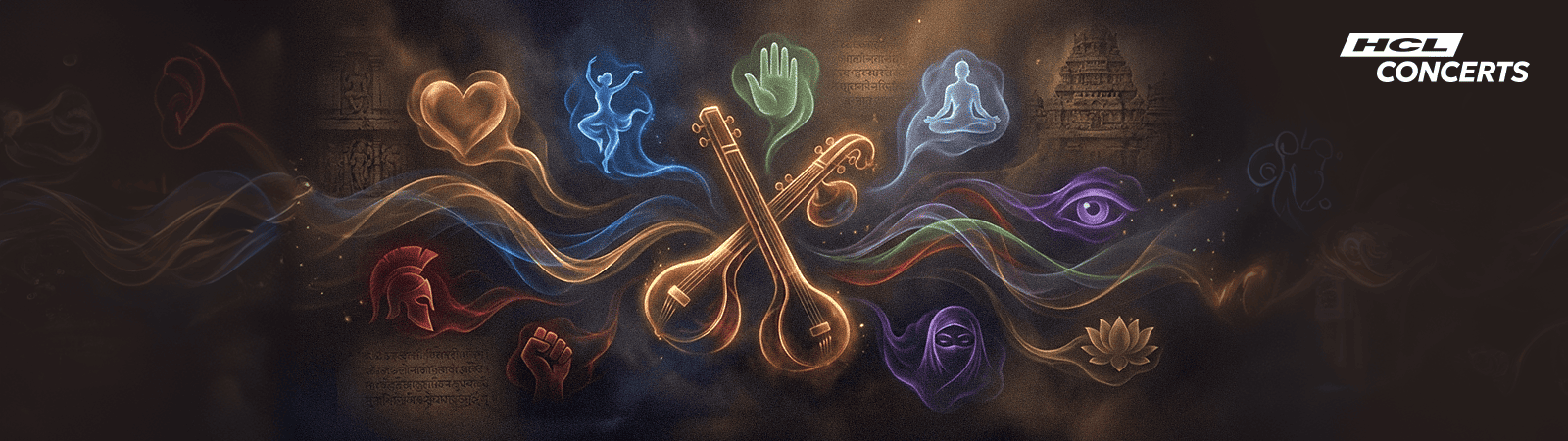
How Ragas Evoke Specific Rasas (Moods)
2025-12-30Indian classical music has a deep emotional core. It does not rush, it slowly reaches the listener and stays there. One reason it connects so strongly is because of rasa. Rasa means feeling or mood. Every raga is traditionally associated with a dominant emotional experience. When a musician performs a raga with care, the listener does not just hear music but also feel something.
At HCL Concerts, this emotional journey is at the heart of every performance. The platform brings classical music to modern audiences without losing its soul. Each concert becomes more than an event. It becomes an experience shaped by mood, time, and emotion. This blog explores how ragas create these moods. It explains rasa in simple words. It also shows how different musical elements work together to shape emotion.
Understanding the Concept of Rasa
Rasa is an ancient idea from Indian art and performance. It comes from Sanskrit and means essence or flavour. In music, rasa is the feeling that stays with you after listening. It could be calm. It could be joyful. It could even feel heavy or intense.
Rasa is not only about the tune. It depends on how the raga is played. The notes, the pace, and the expression all matter. Two artists can perform the same raga and still create slightly different emotions. That is the beauty of this.
Indian tradition speaks of nine rasas, also called nav rasa. These cover the full range of human emotions. Classical music often focuses on one main rasa in a performance. Others may appear briefly, but one mood usually leads the journey.
The Science Behind How Ragas Create Mood
Ragas are not random melodies. They are carefully structured systems. Each part of a raga plays a role in shaping emotion. Together, these parts help express nav rasa in music.
Role of Swaras (Notes)
Swaras are the basic notes of Indian music. Each swara has a character. Some sound stable and calm. Others feel tense or emotional. The way these notes are placed creates a mood. For example, softer notes used gently can bring peace or sadness. Sharper notes used strongly can create energy or anger. The listener may not know the theory, but they feel the effect.
Arohana–Avarohana (Scale Movement)
Arohana is the upward movement of notes. Avarohana is the downward movement. These movements are defined for every raga, though some allow flexibility in phrasing. Some ragas rise slowly and fall gently. This creates a soothing mood. Others move sharply or skip notes. This can create tension or excitement. The scale movement guides how the emotion flows.
Vadi–Samvadi (Primary & Secondary Notes)
Every raga has a vadi and samvadi. These are the most important notes in the raga. The vadi is the main note. The samvadi supports it. When these notes are stressed, the mood becomes clear. If a raga has a strong and stable vadi, it may feel calm or devotional. If the vadi feels sharp or restless, the mood changes. This balance between vadi and samvadi shapes the emotional centre of the raga.
Tempo & Rhythm
Tempo plays a big role in mood. Slow tempo often creates depth and reflection. A fast tempo can bring joy, excitement, or even aggression. Rhythm also plays a role. A steady rhythm feels grounding, while a complex rhythm can feel playful or intense. Musicians use tempo carefully to support the rasa they want to express.
Gamakas & Ornamentation
Gamakas are note movements and ornaments. They add expression to the music. A straight note feels plain. An ornamented note feels alive. Gentle gamakas can bring tenderness or longing. Strong gamakas can show power or restlessness. Ornamentation adds emotion between the notes, not just on them.
Mapping Rasas to Ragas
| Name of Rasa | Feeling / Emotion | Example in Classical Music | Bollywood Song Examples |
|---|---|---|---|
| Śṛṅgāra | Love, romance | Romantic bandishes, devotion to Krishna | “Mohe Rang Do Laal” (Bajirao Mastani), “Raabta” (Agent Vinod) |
| Karuna | Compassion, sadness | Slow alap-based compositions, expressive vilambit | “Agar Tum Saath Ho” (Tamasha), “Tadap Tadap” (Hum Dil De Chuke Sanam) |
| Veera | Courage, strength | Strong raga-based themes with firm rhythm | “Kar Har Maidaan Fateh” (Sanju), “Chak De India” (Chak De India) |
| Raudra | Anger, intensity | Powerful rhythmic passages, forceful phrasing | “Aarambh Hai Prachand” (Gulaal), intense folk-based themes |
| Hasya | Joy, playfulness | Light classical forms, folk-influenced ragas | “Ek Chatur Naar” (Padosan), “Sar Jo Tera Chakraye” (Pyaasa) |
| Bhayanaka | Fear, tension | Dark tonal movements, suspense-driven phrases | “Bhootni Ke” (Singh Is Kinng), background themes in thrillers |
| Adbhuta | Wonder, amazement | Ragas with unexpected turns and note patterns | “Jiya Jale” (Dil Se), “O Rey Chhori” (Lagaan) |
| Bibhatsa | Disgust, aversion | Rarely used, symbolic musical expression | “Pardesi Yeh Sach Hai Piya” (symbolic emotional rejection) |
| Shanta | Peace, calm | Meditative and devotional ragas | “Kun Faya Kun” (Rockstar), “Allah Tero Naam” (Hum Dono) |
Shringar (Love, Romance)
Śṛṅgāra is the rasa of love. It is gentle and expressive. In music, it often feels warm and flowing. This rasa can show romance between people or devotion towards the divine. Ragas linked to this rasa often use soft notes and smooth movements. The pace is usually relaxed. The listener feels comfort and closeness. Many listeners connect easily with this rasa because it feels familiar and emotional.
Karuna (Compassion, Sadness)
Karuna reflects sorrow and empathy. It does not feel dramatic. It feels quiet and deep. This rasa often appears in slow compositions where every note feels heavy. Several performances under the Raaga Collective by HCL explore reflective and emotionally deep spaces, often aligned with Karuna. These performances bring together artists who focus on mood and depth rather than speed. Karuna-based renditions allow listeners to pause and reflect. They remind people of loss, care, and human connection.
Veera (Courage, Heroism)
Veera reflects inner strength and quiet confidence. There is a sense of purpose in this rasa. The music feels steady and assured rather than rushed. Notes are delivered with clarity, and the rhythm holds firm throughout the performance. At times, the pace builds to lift the energy in the room. Veera suits stories of courage, leadership, and resolve. Many listeners walk away feeling inspired and mentally uplifted after such renditions.
Raudra (Anger)
Raudra represents intensity and controlled anger. In music, this does not mean noise, but means power. Sharp note movements, strong rhythm, and forceful playing define this rasa. It can feel unsettling but also impressive. Raudra shows how music can express even difficult emotions in a refined way.
Hasya (Joy, Playfulness)
Hasya brings lightness and happiness. It feels playful and cheerful. This rasa often appears in lighter classical forms and semi-classical pieces. The tempo is usually quicker, and the phrases feel lively. Listeners often smile or feel relaxed while listening. Hasya balances heavier emotions in a concert setting.
Bhayanaka (Fear)
Bhayanaka creates tension and unease. It is subtle, and does not rely on volume. Instead, it uses silence, pauses, and unexpected movements.
This rasa is less common in concerts but still important. It shows the full emotional range of music. When performed carefully, it keeps listeners alert and engaged.
Adbhuta (Wonder, Amazement)
Adbhuta brings surprise and curiosity. The listener feels a sense of discovery. Ragas expressing this rasa often use unusual note patterns. The phrases may feel unexpected. This rasa keeps the audience curious and engaged. It reminds listeners of the vastness of Indian classical music.
Bibhatsa (Disgust, Aversion)
Bibhatsa is rarely used directly in music. It represents rejection or discomfort. In classical performance, it is usually symbolic. This rasa may appear briefly to contrast with other emotions. It shows that music can reflect even uncomfortable truths without being harsh.
Shanta (Peace, Tranquillity)
Shanta is the rasa of calm. It is often seen as the highest state. Music expressing Shanta feels still and centred. The tempo is slow. The notes are steady. There is space between sounds. Many devotional and meditative ragas focus on this rasa. Listeners often feel grounded and relaxed after such performances.
Time of Day & Rasa
Time matters in Indian music. Many ragas are linked to specific times of day. This connection supports rasa. Morning ragas often feel calm or hopeful, whereas evening ragas may feel romantic or reflective. Night ragas can feel deep or intense. When time and rasa align, the emotional impact becomes stronger.
Conclusion
Ragas are emotional journeys. They are built with care and intention. Every note, pause, and movement supports a specific mood. Through nav rasa, Indian classical music reflects the full range of human feeling. Platforms like HCL Concerts help preserve and share this depth. By presenting thoughtful performances, they allow listeners to experience music beyond sound. They experience emotion, time, and meaning. Understanding rasa does not require musical training. It only requires listening with attention. When you do, the music speaks for itself.