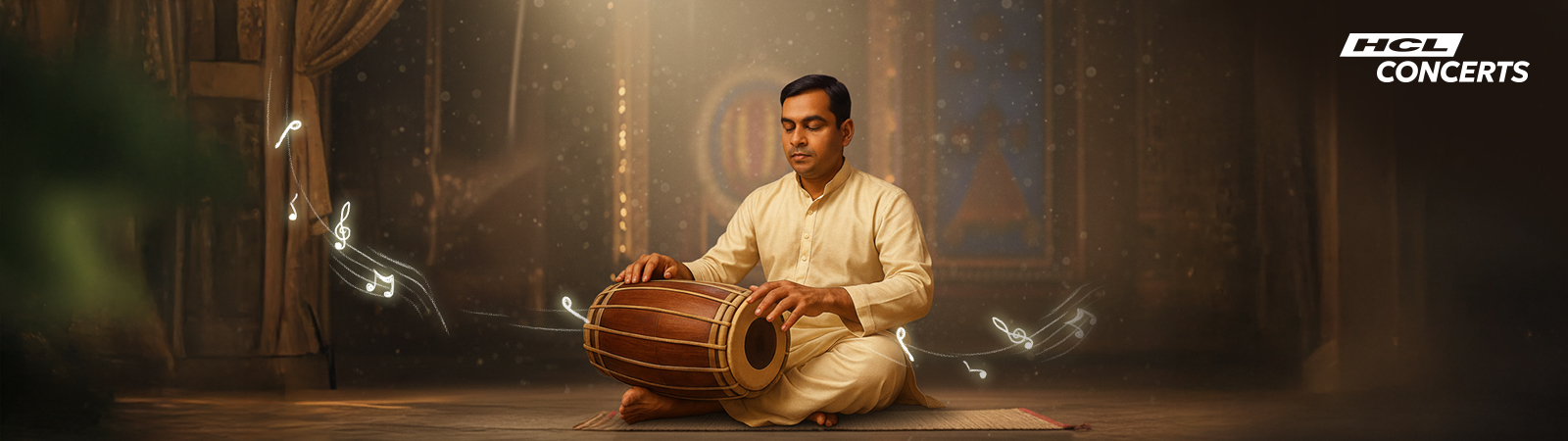
The Role of the Mridangam in Carnatic Music
2025-12-05When you first sit down to a Carnatic concert, one of the first sounds to grab your attention is the deep, warm pulse of the Carnatic mridangam. It is the heartbeat that keeps the musical story moving, guiding melodic phrases and supporting the singer or instrumentalist. In Carnatic music, the mridangam goes beyond keeping time; it interacts with, enriches, and converses with the melody. If you love Indian classical music or are learning to appreciate its finer details, understanding this drum will change how you listen. You will hear this rhythm come alive, not just a background pattern. And when you want to experience excellent performances or discover young talent, platforms such as HCL Concerts bring both live and Carnatic music online events to you, helping preserve and popularise this rich tradition.
History and Origin of the Mridangam
If you trace the mridangam’s story, you find roots woven into the same fabric as Carnatic classical music itself. Remember that Carnatic and Hindustani music grew side by side in India, but each tradition favoured different percussion instruments and roles. Ancient texts and temple carvings depict early double-headed drums; over the centuries, those instruments evolved into the barrel-shaped, two-headed mridangam used in Carnatic concerts today. The instrument has evolved into the barrel-shaped, two-headed drum you hear today, finely tuned to match the pitch and mood of the concert.
For you, as a listener or performer, this history matters because it shows how the mridangam evolved into both a functional and an expressive instrument. It was never a mere clockwork for timekeeping; it was shaped to convey subtle shades of rhythm and emotion. In modern times, institutions and promoters who nurture classical music help keep this tradition alive by supporting concerts and artists who play the mridangam. HCL Concerts, for example, has championed Indian classical music for decades and provides platforms where mridangam artists share their craft.
Construction and Design of the Mridangam
Think of the mridangam as two pots stuck together: one pot produces low sounds, and the other produces high sounds. The body is usually carved from a single block of jackfruit wood. The larger head gives deep, resonant tones while the smaller head produces clearer, sharper sounds. The left (bass) head has a black paste applied to its centre that helps deepen and focus the tone. Leather straps run around the drum so you can tighten or loosen the skins to tune it, and players sometimes slip small wooden wedges under the straps for fine adjustments.
Each part matters to the final sound. The wood, the thickness of the skins, the paste recipe and how tightly the straps are set all change the drum’s voice. When you listen closely, you will hear some mridangams sound fuller and warmer, and others sound brighter and snappier, depending on how they were made and tuned.
The Mridangam’s Role in a Carnatic Concert
Among the many instruments in Carnatic music, the mridangam acts as your compass, marking the tala and steering the performance. It marks the tala or rhythmic cycle and supports the main artist through every improvisation and composition. But its function is not only mechanical. The mridangam accompanies, punctuates, and often takes centre stage in rhythmic exchanges called tani avartanam, the solo segment where the percussionist showcases virtuosity and creativity. This is where you will hear the mridangam at its most articulate: complex phrases, playful responses to the melody, and tight teamwork with the other musicians.
Attending an HCL Concerts event, whether a well-curated physical concert or an online Baithak session, you get to witness this conversation live. These platforms celebrate both established maestros and emerging artists so that you can experience the full spectrum of mridangam’s role in performance. If you are passionate about supporting concerts, buying tickets, or exploring recordings, these curated events by HCL Concerts make it easy for you to connect with authentic performances.
Playing Techniques and Styles (Bani)
When you begin mridangam playing, you start with basic strokes that become the building blocks of more complex phrases. The language of the mridangam is built from basic strokes, and learning them is like learning a new alphabet. The common basic strokes include Tha, Dhi, Thom, and Nam. Each stroke has a character:
- Tha: A clear, open beat from the dominant face, like a single bright heartbeat.
- Dhi: A compound stroke that blends clarity and resonance.
- Thom: A deeper strike is often used for anchoring a phrase.
- Nam: A muted, softer tone that colours the rhythm.
You will hear players combine these into syllabic phrases, called solkattu, which map directly onto tala cycles. Different regions and teacher lineages (banis) give rise to distinct playing styles. Some banis favour springy, dance-like patterns; others emphasise measured clarity and a spacious feel. Listening carefully, you can tell the bani by the way a phrase is shaped, much like recognising a singer’s accent.
When you learn or teach mridangam playing, breaking phrases into these building blocks helps. You start with single strokes, build to patterns, and eventually improvise in conversation with the melody. HCL Concerts’ talent showcases and digital library make it easier for you to explore various banis and performances at your own pace.
Mridangam Maestros Who Defined the Art Form
If you want to understand the instrument, listen to the masters. Their recordings are your best teachers. Artists who rose to fame did so by expanding the drum’s expressive range, inventing phrases that singers and instrumentalists now expect, and blending tradition with personal innovation. Each maestro teaches you about timing, tone, and how to listen: how to move from support to reply without overshadowing the melody.
HCL Concerts’ long-standing work in organising physical concerts and building a digital content library has helped preserve performances from many legendary artists and promoted fresh voices. When you explore these archives, you follow a lineage of learning that informs how mridangam is played today.
Conclusion
It does not matter whether you are a performer, student, or devoted listener; the mridangam is the guide for everyone, and it makes Carnatic music feel alive. It is an instrument of conversation, a storyteller in rhythm, shaping the flow of each raga and composition. When you listen with attention, you will hear how mridangam phrases echo the mood of a raga, support a singer’s ornament, and sometimes challenge the melody with ingenious rhythmic turns.
If you want to deepen your connection to Carnatic classical music, explore live concerts and curated online performances: they are gateways to both tradition and new interpretations. HCL Concerts curates and allows you to stream classical music, helping you access these experiences through physical events, Carnatic music online concerts, talent hunts, and a rich content library available online. Engage with these platforms, and you will find the mridangam’s world opening like a hidden chamber of rhythm waiting for you to step in.