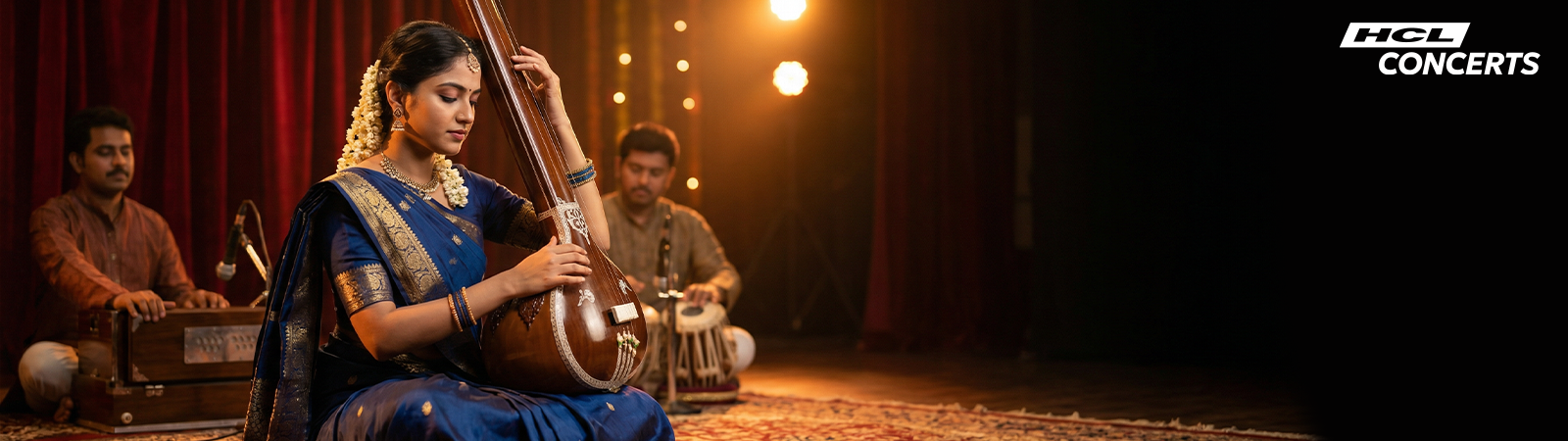
Tanpura in Classical Music: Meaning and Importance
2026-03-06Have you ever closed your eyes during a classical music concert and felt yourself floating on a sea of sound – a continuous, resonant hum that seems to hold the entire performance together? That’s the magic of the tanpura instrument. This unassuming four-stringed companion doesn’t play melodies or keep rhythm, yet without it, every raga would feel incomplete, every note somewhat untethered.
Imagine a musician sitting cross-legged on stage, fingers gently stroking the strings of this elegant, gourd-shaped instrument. The tanpura creates an infinite sonic cushion – a dreamy, meditative drone that allows vocalists and instrumentalists to explore the depths of ragas with absolute confidence.
Whether you’re a seasoned classical music lover or someone just beginning to explore the enchanting world of Hindustani and Carnatic classical music, understanding the tanpura opens a whole new dimension of appreciation. Join us as we uncover the meaning, evolution, and profound importance of this extraordinary instrument that has quietly shaped Indian classical music for centuries.
What Is a Tanpura in Classical Music?
The tanpura is the soul of Indian classical music. This string instrument creates a continuous harmonic foundation upon which entire performances are built.
- Drone instrument: Unlike melodic instruments that play varying notes or rhythmic instruments that provide beat patterns, the tanpura produces a steady, unchanging tonal base.
- 4-6 strings: These strings are tuned to specific notes based on the raga being performed – usually the tonic (Sa), its fifth (Pa), and the upper tonic.
Origin and Evolution of Tanpura
The Natya Shastra, the ancient treatise on performing arts, describes instruments that created sustained tones to support vocal music – early ancestors of today’s tanpura.
“Tanpura” likely derives from “tana” (musical phrase) and “pura” (to fill or complete). Some scholars trace it to Persian influences, where similar drone instruments existed, showing the beautiful cultural exchanges that enriched Indian classical traditions over centuries.
In North India, it developed alongside Hindustani classical music, taking the form we recognise today. By the medieval period, the tanpura had become indispensable in royal courts and temple concerts. The 20th century brought further refinement as master craftsmen in Miraj (Maharashtra) and Tanjore (Tamil Nadu) perfected their regional styles.
Structure and Design of the Tanpura
Every element of the tanpura’s construction contributes to its hauntingly beautiful sound.
- Resonating gourd body: Carved from a single piece of pumpkin gourd or jackwood, this hollow chamber amplifies the string vibrations, creating that rich, enveloping sound.
- Long, elegant neck: It measures 3 to 4 feet in length, providing the string length necessary for those slowly decaying, harmonically rich tones.
- Curved bridge: This piece of bone or ivory sits atop the gourd, and the strings pass over it before attaching to the instrument’s base. It creates the characteristic “jivari” of the tanpura.
- Four main strings: It stretches from the tuning pegs at the top of the neck down to the bridge and beyond. Traditionally made from steel or bronze, these strings are tuned with extreme precision. Small threads called “beads” are carefully placed under the strings at the bridge.
How the Tanpura Works?
Understanding how the tanpura creates its mesmerising sound reveals why this seemingly simple instrument is acoustically sophisticated.
- Continuous resonance through cyclic plucking: A tanpura player, or “tanpura vadak”, plucks the four strings in sequence, one after another, in an endless cycle.
- Jivari effect: When strings vibrate over the carefully curved bridge, they generate a cascade of overtones and harmonics. These upper frequencies blend, creating that rich, complex drone that seems almost alive.
- Basic tuning: The pattern for most ragas follows Pa-Sa-Sa-Sa (fifth tonic-tonic-tonic). However, variations exist depending on the raga’s characteristics.
- “Breathe” to work: Wood and gourd respond to temperature and humidity, subtly changing the instrument’s voice.
Importance of Tanpura in Classical Performances
The tanpura establishes the tonal universe for the entire performance. For the performing artist, the tanpura provides comfort and confidence.
The Sound of the Tanpura
The tanpura creates a sonic atmosphere called Shruti – the tonal reference essential to Indian music. It:
- Grounds the performer emotionally
- Helps listeners absorb subtle microtones
- Enhances the emotional rasa of a raga
- Creates meditative continuity
Tanpura Playing Technique
Playing the tanpura demands patience and sensitivity rather than speed.
- The technique involves gentle, cyclic plucking patterns using all four fingers of the right hand.
- Timing between plucks creates the drone’s character. The interval between each pluck must be perfectly consistent – not rushed, not delayed.
- The left hand makes subtle adjustments to string tension and tuning throughout the performance.
- Importantly, there’s no rhythmic element to tanpura playing. It doesn’t follow tala (rhythmic cycles) or provide beats.
Types of Tanpura
Different styles of tanpuras have evolved, each with unique characteristics that suit specific traditions and contexts.
- The Hindustani Miraj-style tanpura: Originating in Miraj, Maharashtra, these instruments typically feature rounded gourds, long necks and produce a deep sound.
- The Carnatic Tanjore-style tanpura: These instruments, crafted in Tanjore (Thanjavur), Tamil Nadu, often have a more elongated body and produce brighter tones.
- Smaller Tamburi or Tanpuri variants: These compact versions are easier to transport and handle, making them popular for practice sessions, travel, or accompanying lighter classical forms.
- Male and female tanpuras: Male tanpuras are larger with deeper voices, whilst female tanpuras are smaller with higher pitch ranges.
Why Does Tanpura Matter in Classical Music?
The tanpura embodies philosophical and spiritual dimensions that define the very essence of Indian classical music.
- It represents the concept of “OM,” or the primordial sound from which all creation emerges and to which all returns.
- The tanpura teaches fundamental musical lessons about pitch, harmonics, and resonance.
- It creates unity in ensemble performance. When multiple artists perform together, the tanpura serves as a common reference point, keeping everyone aligned.
How Artists Use the Tanpura on Stage
Watch any great maestro, from legendary vocalists to contemporary performers featured at HCL Concerts. Before beginning, they pause. They listen. They align themselves with the tanpura.
On stage, artists use it to:
- Establish pitch before singing or playing.
- Maintain tonal accuracy throughout the performance.
- Transition smoothly between ragas.
- Create emotional immersion for audiences.
Role in Practice (Riyaz)
In the practice room, the tanpura becomes a teacher, a companion, and a mirror, essential for developing musical excellence.
- Daily practice (riyaz) with tanpura is fundamental for voice culture. Singers spend hours practicing scales, exercises, and compositions with the drone as their constant reference.
- The tanpura is indispensable for ear training. By repeatedly hearing the tonic and fifth in the drone, students internalise these relationships.
- It builds pitch memory and stability. Practicing with the tanpura teaches you to maintain your pitch centre even during complex melodic passages.
Learning tips for students:
- Start practice by listening to the drone for a few minutes
- Match your voice slowly to the base note
- Avoid rushing into compositions
- Focus on listening more than singing
Conclusion
The tanpura teaches us an important musical truth: greatness often begins quietly. Neither does it seek applause nor perform solos. Yet without it, Indian classical performance loses its centre. The tanpura instrument creates harmony between artist, raga, and listener, transforming sound into experience.
At HCL Concerts, every performance celebrates this timeless relationship between tradition and emotion. The tanpura reminds us that music is not only about the notes you hear but also the vibrations you feel. So, the next time you attend a concert or begin listening to a raga, pause for a moment. Tune into that gentle drone.
Because within that sound lies the soul of Indian classical music itself – steady, eternal, and deeply human.