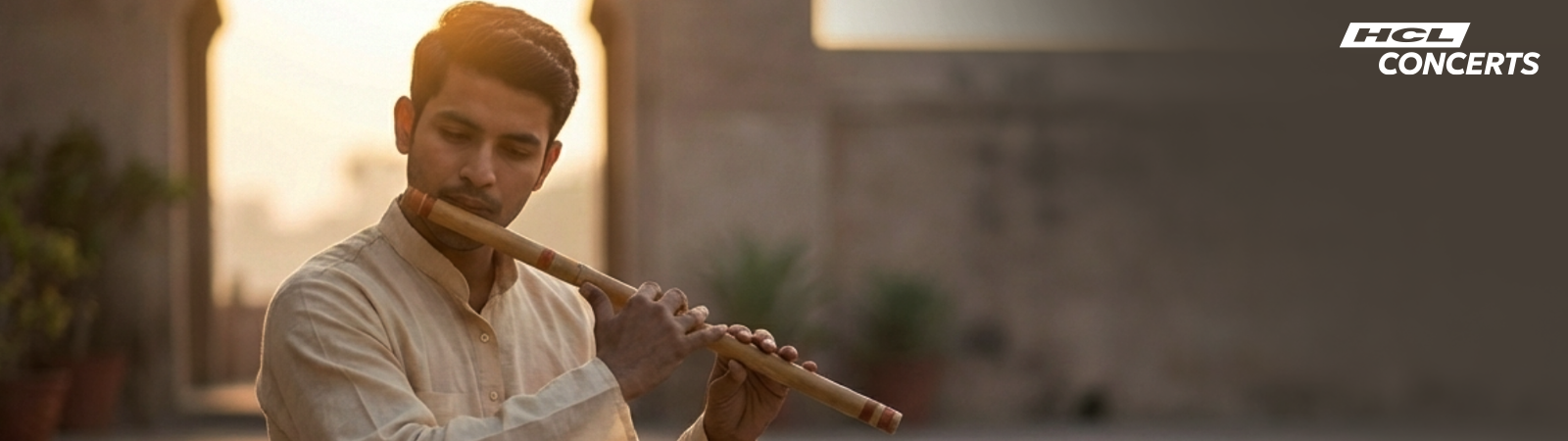
Why the Bansuri Holds a Special Place in Classical Music
2026-04-09Ever wondered why the sound of a bansuri can stop you mid-step and pull you out of your thoughts completely? There is something about that soft, airy note that feels less like music and more like a quiet conversation with yourself. The bansuri flute is one of the oldest instruments in the world, and yet every time you hear it, it feels fresh. From the old temple courtyards to today’s busy concert stages, this simple bamboo flute has carried the spirit of Indian music across the centuries. Join us as we explore exactly why this little instrument continues to hold such a beloved place in the world of classical music.
How the Bansuri Produces Its Sound
Here is the wonderful thing about the bansuri: it is beautifully simple.
You blow air across a small hole near one end of the bamboo tube. The air splits as it hits the edge of that hole, which creates the sound. It works a lot like blowing across the top of an empty bottle. The air inside the tube starts to vibrate, and that vibration becomes the note you hear.
The player controls the pitch by covering and uncovering six holes along the body of the flute. Cover more holes, and you get a lower note. Uncover them, and the pitch rises. There are no keys, no valves, and nothing mechanical. Just breath, fingers, and bamboo.
That direct connection between player and sound is what gives the bansuri its warm, living quality. When a skilled musician slides between notes by partly covering a hole (this is called meend), you get that smooth, melting sound that no other instrument quite matches.
Features That Make the Bansuri Popular
Portable and Lightweight
Unlike a sitar or a full tabla set-up, the bansuri is incredibly easy to carry. You can slip it into a cloth bag, take it on a bus, or tuck it under your arm. It weighs almost nothing. For students, travelling musicians, or anyone who wants to play wherever the mood strikes, that kind of ease is genuinely freeing.
Affordable Compared to Other Instruments
Starting your musical journey does not have to be expensive. A good beginner bansuri is very reasonably priced compared to most classical instruments. While a fine sitar can cost tens of thousands of rupees, you can pick up a well-made bamboo flute at a fraction of that. This makes the bansuri one of the most open and welcoming ways to step into Hindustani music.
Minimal Maintenance
The bansuri asks very little in return. There are no strings to change, no parts to repair, and no reeds to buy. A quick wipe after playing, keeping it away from too much heat or moisture, and storing it safely is really all it needs. That makes it a great long-term companion, whether you play casually or seriously.
The Bansuri in Hindustani Classical Music
In Hindustani music, the bansuri holds a place of real reverence. It is closely linked to Lord Krishna, who is said to have played his flute and enchanted everyone in Vrindavan. That spiritual connection gives the instrument a depth that goes beyond just music. You feel it when you hear it.
In performance, the bansuri is used to explore ragas in great detail. It can hold long, steady notes, slide smoothly between pitches, and express the finest shades of feeling. This makes it ideal for the slow, meditative opening section of a raga, called the alaap. Of all instruments, the bansuri perhaps comes closest to sounding like the human voice.
Types of Bansuris
Not all bansuris are the same. They come in different sizes and keys, and what works for one musician may not suit another.
The three most common types are the bass bansuri, the alto bansuri, and the soprano bansuri. The bass bansuri is the longest and produces deep, rich tones. It is what you will typically see on concert stages. The alto sits in the middle range and suits intermediate players well. The soprano is the shortest, plays higher notes, and is usually where beginners start.
Bansuri in the key of E or G are the most popular starting points for new learners, as they match well with the natural position of the lips when you are just finding your footing.
Why Many Beginners Choose the Bansuri
Ask someone why they picked up the bansuri, and the answer is usually simple: it moved them. Maybe it was the flute melody drifting through an old Bollywood song, like the gentle notes in “Man Mohana” from Sehra (1963), or the bansuri lines in “Baazigar O Baazigar” that first caught their ear. Or maybe they heard it live and felt something they could not quite put into words.
Beyond the emotional pull, there are practical reasons too. You do not need to know music theory to get started. You work on producing a clean, clear note first, and that small win early on keeps you going. Progress feels real and encouraging. There is also a growing community of teachers and online resources built around the bansuri, so you never feel like you are learning alone.
Where You Can Hear the Bansuri Today
The best way to understand what the bansuri can do is to hear it performed live. And that is more accessible than you might think.
Pandit Hariprasad Chaurasia is the name most people associate with the concert bansuri. His work, including his famous collaborations with Pandit Shiv Kumar Sharma as the Shiv-Hari duo, brought the flute to millions of people across India. His performances of ragas like Yaman and Bhairavi show just how much feeling a single bamboo tube can carry.
HCL Concerts, India’s largest and longest-running platform for Indian classical music, has been celebrating artists like these for 28 years. With more than 850 physical concerts across 12 cities, including Delhi, Lucknow, Chennai, and Nagpur, and 220+ digital concerts reaching over 140 million attendees, HCL Concerts makes it easy for everyone to experience this music. You can register to attend a live show through their Physical Concerts or enjoy streaming their shows from the comfort of your home via their Digital Concerts. Their Baithak series features authentic live performances of Hindustani and Carnatic music, and The Great Indian Classical Podcast offers fascinating conversations with some of India’s most iconic musicians.
Conclusion
The bansuri is more than just an instrument; it is a doorway into something bigger: centuries of musical tradition, the beauty of raga, and a way of listening that slows you down in the best possible way. Whether you want to play it, listen to it, or understand why it moves so many people, this humble bamboo flute has room for everyone. Let HCL Concerts help you find your way in. The music is already playing. All you need to do is tune in.