What Is Tarana in Hindustani Classical Music?
2026-06-24Ever heard a vocalist unleash a series of rapid, percussive syllables that seem to dance with the tabla in perfect synchrony? That moment when words transform into pure sound, and rhythm becomes melody itself? That is Tarana, one of the most exciting, joyful, and skillful forms in all of Hindustani classical music.
If you’ve ever wondered what sets Tarana apart from other vocal forms, or if you’ve felt that exhilarating rush watching a performer accelerate into a breathless rhythmic climax, you’re about to discover why this form has captivated audiences for centuries. At HCL Concerts, we celebrate Tarana as a testament to the boundless creativity and technical brilliance of Hindustani classical tradition.
Tarana: The Composition That Sounds Like Pure Rhythm
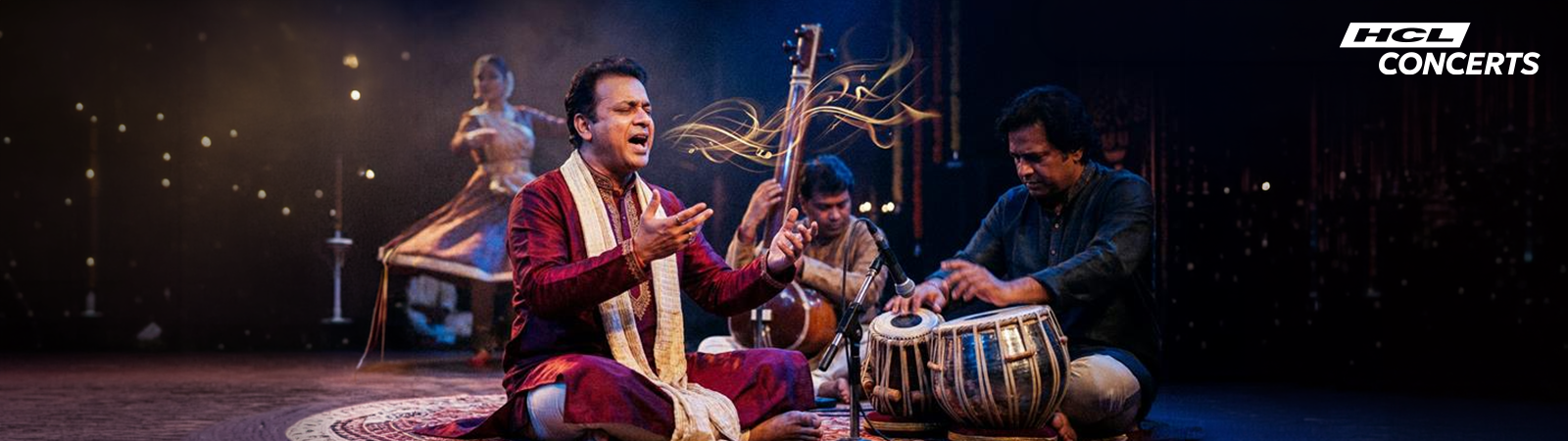
Imagine this: a vocalist takes the stage, and the tabla player settles into position. But instead of singing poetic lyrics, the singer begins with a series of syllables: ta, dha, janu, om, tara, ri, ri, each clear and precise. As the syllables blend with the tabla’s rhythm, they create a captivating musical dialogue between voice and percussion.
This is Tarana, a form of music that focuses on pure sound and rhythmic skill rather than lyrical meaning. There is no story to follow or poem to reflect on. Instead, it offers a rich musical experience that showcases the voice as an instrument of remarkable precision, agility, and beauty.
Where Tarana Fits in Hindustani Music
Tarana occupies a distinctive place in the architecture of a classical recital. It typically appears during the second half of a performance, after the listener has been immersed in deeper, more meditative forms like Khayal. Think of it as the finale, the crescendo, the moment when energy reaches its peak.
Hindustani classical music is structured like a journey. You begin slowly, exploring a Raga’s nuances. You build an emotional connection. Then, as the performance reaches its latter stages, Tarana arrives like a celebration in fast, exuberant, technically dazzling form. It’s the form that sends audiences’ home buzzing with exhilaration, their hearts lifted by the sheer brilliance on display.
The Origins: Amir Khusro’s Immortal Gift
Tarana’s story begins with a towering figure in Indo-Islamic cultural history: Amir Khusro (1253–1325 CE). This legendary poet, musician, and innovator didn’t just perform, he transformed Indian classical music itself. In his visionary hands, Tarana was born.
Amir Khusro created Tarana as a revolutionary form that liberated music from the constraints of language. By replacing lyrical content with rhythmic syllables, he opened an entirely new dimension of musical expression. His invention allowed vocalists to explore pure rhythm, virtuosity, and the interplay between voice and percussion without the weight of poetic narrative.
Nearly 700 years later, Tarana remains his enduring legacy, a form that proves sometimes the greatest art emerges when we set aside words and embrace pure sound.
What Makes Tarana Sound the Way It Does
To truly appreciate Tarana, forget everything you know about singing based on lyrics. Instead, tune your ear to what matters: the syllables themselves and how they interact with rhythm.
Speed and Energy: How a Tarana Builds
Here’s what makes Tarana so captivating for live audiences: the acceleration. A Tarana rarely explodes onto the stage at maximum velocity. Instead, it builds with deliberate artistry.
The performance typically opens at a moderate, almost leisurely pace. The vocalist and tabla player establish the Raga, ground themselves in the rhythmic cycle, and invite you into their world. You’re comfortable, observing, and present. Then gradually, almost imperceptibly, the tempo begins to quicken.
The syllables tumble faster. The tabla responds with accelerating volleys. The performer’s breath becomes more pronounced. The energy builds and builds until you reach a climactic moment of almost supernatural synchronisation between vocalist and percussionist. That’s when Tarana truly hits you right in the feels.
The Raga Underneath: Melody Still Rules
Here’s a beautiful secret about Tarana: despite its focus on rhythm and syllables, the Raga is never abandoned. The vocalist still honours the melodic contours of the chosen Raga, whether it’s the contemplative beauty of Raag Yaman, the morning devotion of Raag Bhairav, or the pre-dawn mystique of Raag Bhatiyar.
What changes is how the Raga is expressed. Instead of long, sustained notes that showcase emotional depth, the Raga emerges through rapid articulation and ornamentation. The syllables become the vehicle for melodic expression, creating a fascinating interplay between rhythm and Raga that both newcomers and seasoned aficionados find utterly compelling.
Tarana and Kathak: Made for Each Other
Tarana doesn’t exist in isolation. It’s inextricably linked to the classical dance forms of Kathak, Bharatanatyam, Odissi, where vocalists and dancers create something truly magical together.
Dance Forms That Interpret Tarana
Imagine watching a Kathak dancer as the Tarana accelerates. The dancer’s feet begin to pound the ground in intricate, lightning-fast footwork, each step perfectly aligned with the vocalist’s syllables. Spins become dizzying. Expressions shift from gentle to intense. The dancer’s entire body becomes a vehicle for the rhythm, interpreting the vocal phrases through movement.
Kathak’s partnership with Tarana is particularly profound, rooted in centuries of shared evolution. The form also occasionally appears in contemporary fusion contexts with other classical dance traditions, showcasing how Tarana’s universal rhythmic language can bridge different artistic worlds. This versatility speaks to Tarana’s power, whether it’s the rapid footwork of Kathak or creative interpretations by other forms, the music’s energy and brilliance shine through, reminding us of Indian classical arts’ boundless creative potential.
The Competitive Element: Jugalbandi with the Tabla
One of the most exhilarating aspects of a live Tarana performance is the call-and-response dynamic. What begins as a collaboration between vocalist and tabla player can transform into something almost competitive, a musical conversation where each artist challenges the other with increasingly complex rhythmic patterns.
Watch how the tabla player responds to the vocalist’s phrase with an answering volley. Notice how the vocalist incorporates elements of that response into their next phrase. It’s like a musical tennis match, except both players are on the same team, pushing each other toward greater heights of virtuosity. This jugalbandi (duet) element is precisely why audiences find Tarana performances so thrilling. You’re witnessing not just a pre-planned composition, but a spontaneous musical dialogue happening in real time.
Tarana vs Other Vocal Compositions in Hindustani Music
Curious how Tarana compares to other classical vocal forms? Understanding the differences enriches your appreciation of each.
| Composition | Mood & Energy | Lyrical Content | Pace | When It’s Performed |
|---|---|---|---|---|
| Tarana | Exhilarating, virtuosic, playful | Syllables only (no meaningful words) | Builds from moderate to rapid | Often as a finale; creates climactic excitement |
| Khyal | Contemplative, deeply emotional | Full lyrical narrative (devotional or romantic) | Slow unfolding, gradual exploration | Core concert piece: the emotional heart |
| Thumri | Intimate, tender, romantic | Poetic lyrics (often love themes) | Fluid, conversational, unhurried | Semi-classical settings, lighter, theatrical |
| Dadra | Light, playful, folk-like | Simple, often romantic couplets | Moderate, dance-like rhythm | Lighter pieces; popular for younger audiences |
Famous Tarana Performances Worth Listening To
The form truly comes alive through the voices of master musicians. Let’s explore artists whose Taranas have shaped and inspired generations.
Ustad Amir Khan and the Classical Approach
Ustad Amir Khan approached Tarana with the deliberation of a classical scholar. Rather than racing through syllables, he allowed each phrase to breathe, emphasising the Raga’s characteristic movements within the percussive framework. His Taranas are meditations on rhythm itself, slow, majestic, almost regal.
Listen to his recordings, and you’ll discover that speed isn’t everything. Amir Khan reveals Tarana’s spiritual dimension, proving that the form can be as profound as it is energetic.
Pandit Jasraj and the Devotional Tarana
Now contrast that with the legendary late Pandit Jasraj (Padma Vibhushan), whose Taranas shine with spiritual depth and warmth. While Amir Khan was known for a more restrained and classical approach, Jasraj brought a sense of devotion and tenderness. His voice seems to gently shape each syllable, filling them with emotion even as the tempo quickens.
Jasraj’s approach reminds us that classical music, even in abstract form, carries the artist’s heart. His Taranas transcend mere technical display to touch something sacred within the listener.
Contemporary Artists Keeping Tarana Alive
Is Tarana a relic? Far from it. Kaushiki Chakraborty presents Taranas with remarkable ease and technical mastery in her concerts. Meanwhile, a new generation of vocalists from cities such as Delhi, Mumbai, and Varanasi continues to explore and expand the possibilities of this musical form.
These artists prove that Tarana is a living tradition, evolving with each generation while remaining rooted in classical excellence.
How to Listen to a Tarana: A Short Guide
Ready to experience Tarana yourself? Here’s how to unlock its magic.
Follow the Syllables, Not the Words
Let go of your need to understand lyrics. Instead, allow the syllables to wash over you like an ocean of sound. Notice how they cluster, breathe, and form patterns. You’re experiencing music stripped of language, pure sonic expression.
Close your eyes. Feel the rhythm in your chest. Let the syllables become colour and texture.
Watch for the Moment the Tempo Lifts
Pay attention when the acceleration begins. This is Tarana’s emotional climax. Notice when the vocalist and tabla player seem to lock into telepathic synchronisation. The syllables tumble faster. The tabla responds with quickening volleys. That moment when everything locks together? That’s the payoff. That’s when you understand why this form has captivated audiences for centuries.
Conclusion
Tarana celebrates many of the qualities that make Indian classical music so remarkable: tradition, skill, creativity, and the joy of musical expression. Whether you are captivated by the meditative depth of Ustad Amir Khan or inspired by the artistry of today’s emerging performers, Tarana offers a truly memorable listening experience.
At HCL Concerts, we are committed to bringing these musical treasures to audiences. We invite you to experience a live performance of Tarana and discover the magic that unfolds when rhythm, melody, and imagination come together in pure musical expression.