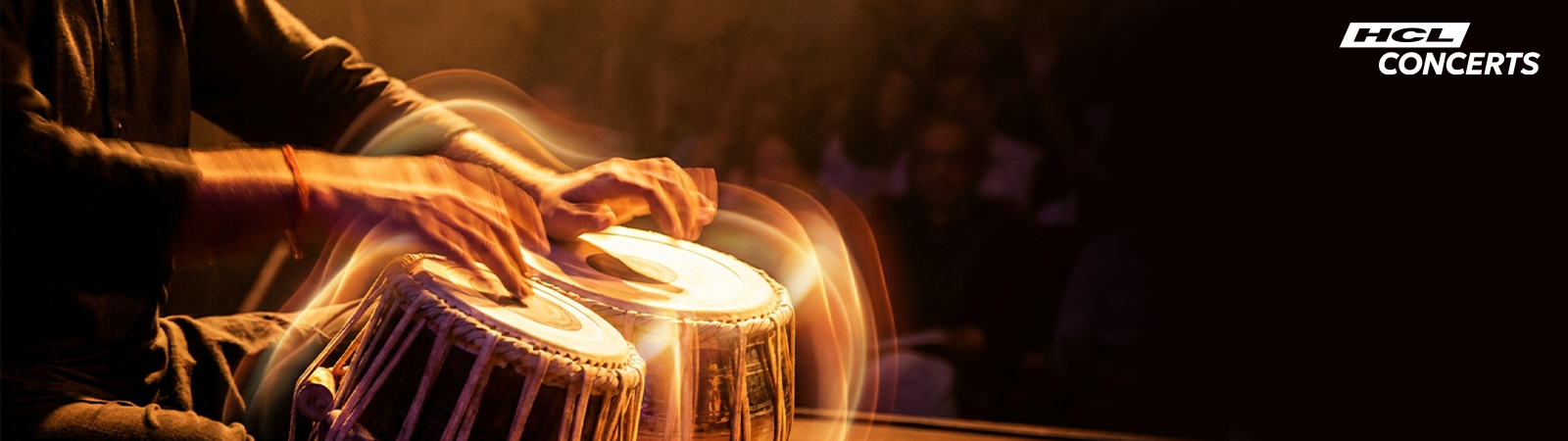
How Tabla Performance Brings Energy to Live Concerts
2026-04-17When a tabla player sits on stage, something shifts in the air. The moment those first beats land, you feel it before you even understand it. Tabla performances have a way of pulling everyone in the room into a single heartbeat. Whether you are a lifelong classical music lover or someone stepping into a live concert for the very first time, the tabla speaks directly to you. It does not ask you to study music theory. It simply asks you to feel. This blog walks you through why tabla performances are so electric on stage and what makes them truly unforgettable.
The Role of Tabla in Live Music Performances
Think of a live musical performance as a moving train. The melody is the view outside the window. Beautiful, captivating, constantly changing. But the tabla? That is the engine. Without it, nothing moves.
Understanding the Basics of Tabla Rhythm
At the heart of every tabla performance is something called a taal. A taal is essentially a rhythmic cycle, a repeating pattern of beats that gives a composition its structure and soul. Think of it the way you think of the chorus in a Bollywood song. You know it is coming, you wait for it, and when it arrives, it hits differently every time.
The tabla consists of two drums played together. The smaller one, called the dayan, sits on the right and produces higher-pitched tones. The larger one, called the bayan, sits on the left and creates deeper, resonant sounds. Together, they create a rhythmic conversation that wraps around the melody like a warm embrace.
When a vocalist or an instrumentalist performs, the tabla is not just keeping time in the background. It actively supports the melody, breathing life into the composition, and holds the entire structure together. Every beat you hear is a deliberate choice.
Why Tabla Stands Out Among Percussion Instruments
There are percussion instruments all over the world. Drums, djembes, congas, bongos. Each one carries its own charm. But the tabla instrument occupies a unique space. It is deeply expressive. A skilled tabla player does not just keep time. They narrate a story through their hands.
The range of sounds a tabla can produce is remarkable. From a crisp, sharp strike to a deep, rolling resonance, each stroke has a name, a character, and a purpose. This is what separates the tabla from most other percussion instruments. It is not merely rhythmic support. It is a voice.
How Tabla Creates Energy on Stage
There is a reason why the crowd leans forward when a tabla solo begins. The energy that builds during a live performance is not accidental. It is crafted, beat by beat.
Building Momentum Through Rhythm Patterns
A tabla performance works much like a great story. It starts slow, it builds, and then it reaches a point where you cannot sit still. This is done through deliberate shifts in tempo and rhythm patterns.
As the performance progresses, the tabla player begins to accelerate the cycle, adding layers of complexity to the beats. This technique is called layakari, and it is the art of playing with time itself. Imagine the opening notes of “Dama Dam Mast Kalandar” gradually building to a crescendo, until the whole room is alive with energy. That feeling is precisely what a skilled tabla performance recreates, only in an even more intimate and powerful way.
The anticipation that builds before a resolution in the rhythmic cycle is genuinely thrilling. When the beat finally lands on the sam (the first beat of the taal cycle), the sense of release is almost euphoric.
Interaction Between Tabla Player and Lead Artist
One of the most beautiful things about watching a live music performance is witnessing the real-time connection between the tabla player and the lead artist. This is not rehearsed choreography. It is a living, breathing conversation happening right in front of your eyes.
The vocalist might stretch a note a little longer than expected. The tabla player responds instantly, adjusting the rhythm to accommodate that moment. The sitar player might speed up in a burst of creative energy. The tabla matches them, step for step, without missing a beat.
This kind of musical dialogue is what makes classical concerts irreplaceable. You cannot replicate it on a recording. Every performance is genuinely one of a kind.
Spontaneity and Improvisation in Live Performances
Improvisation is where the magic truly lives. In a tabla solo, the player is given the stage entirely to themselves, and what follows is nothing short of spectacular. They begin with a known framework, a taal, a tempo, a mood, and then they start to play within it, around it, and sometimes beautifully against it.
The best tabla solos feel like watching someone think out loud in the most extraordinary language imaginable. Legends like Pt. Yogesh Samsi and the late Ustad Zakir Hussain have consistently demonstrated how improvisation on the tabla can hold an entire audience spellbound. When you attend a concert featuring artists of this calibre, you are not just watching a performance. You are witnessing a moment that will never exist again in quite the same way.
Tabla in Modern and Fusion Concerts
Classical music does not live in a glass case. It breathes, evolves, and finds its way into every corner of modern sound.
Blending Classical Rhythm with Contemporary Music
Today, tabla rhythms are finding their way into genres that might surprise you. Jazz, electronic music, hip-hop, and even pop productions have welcomed the tabla as a collaborator. Artists like Karsh Kale have built entire musical identities around the meeting point of tabla and contemporary sounds. The percussion in tracks across Bollywood films like Dil Se or Lagaan carries the deep imprint of classical tabla sensibility, even when dressed in a modern arrangement.
When you hear that crisp, layered rhythm underneath a contemporary track and something about it feels rooted and alive, that is often the tabla at work, whether acknowledged or not.
Growing Popularity of Tabla in Global Performances
The world has taken notice. Tabla players are now performing at international jazz festivals, collaborating with orchestras in Europe, and appearing on stages alongside electronic music producers. This global embrace of the tabla is not a trend. It is a recognition of something timeless.
Platforms like HCL Concerts have played a meaningful role in bringing these conversations to audiences across India. Through their Baithak series, widely regarded as one of the largest destinations for Indian classical music lovers, they have created spaces where the tabla is celebrated in both its purest classical form and its exciting modern collaborations. If you have not yet explored their upcoming concerts, this is your sign to do so.
What to Notice When Watching a Tabla Performance
You do not need to be a trained musician to appreciate a tabla performance. You need to know where to look and listen.
Key Techniques and Hand Movements
Watch the hands closely. The right hand works on the dayan and produces sounds like na, tin, and ta, each created through different combinations of fingers striking the drum. The left hand commands the bayan, producing the deep, booming ge and ka sounds that give the tabla its rich bass character.
The black circular patch you see in the centre of each drum is called the syahi. It is made from a mixture of iron filings and other materials, and it is what gives the tabla its distinctive tonal quality. The way a player presses their palm into the bayan to modulate pitch mid-stroke is one of the most visually striking and sonically satisfying techniques you will witness on stage.
Rhythm Patterns That Drive the Performance
Pay attention to the cyclical nature of the performance. Each taal has a fixed number of beats. Teentaal, for example, has sixteen beats and is one of the most commonly used cycles in Hindustani classical music. As the performance builds, the player divides and subdivides these beats in increasingly complex ways.
When you start to feel that pull, that sense of rhythm almost daring you to anticipate what comes next, you are experiencing the tabla doing exactly what it is meant to do. It is drawing you in, making you a participant rather than just a spectator. And when that final beat lands right where your heart expected it to, there is truly no feeling quite like it in all of live music.
Conclusion
The tabla is not a background instrument. It is the heartbeat of every performance it graces. From the very first stroke to the final flourish of a solo, it shapes the energy, the emotion, and the memory of a concert in ways that stay with you long after the music stops.
Whether you are discovering classical concerts for the first time or returning to a world you have always loved, a live tabla performance offers something rare. It offers presence. Pure, rhythmic, human presence.
HCL Concerts brings you closer to these extraordinary moments through their curated performances and the celebrated Baithak series. The stage is set. The tabla is calling. All you need to do is show up and let the rhythm move you.