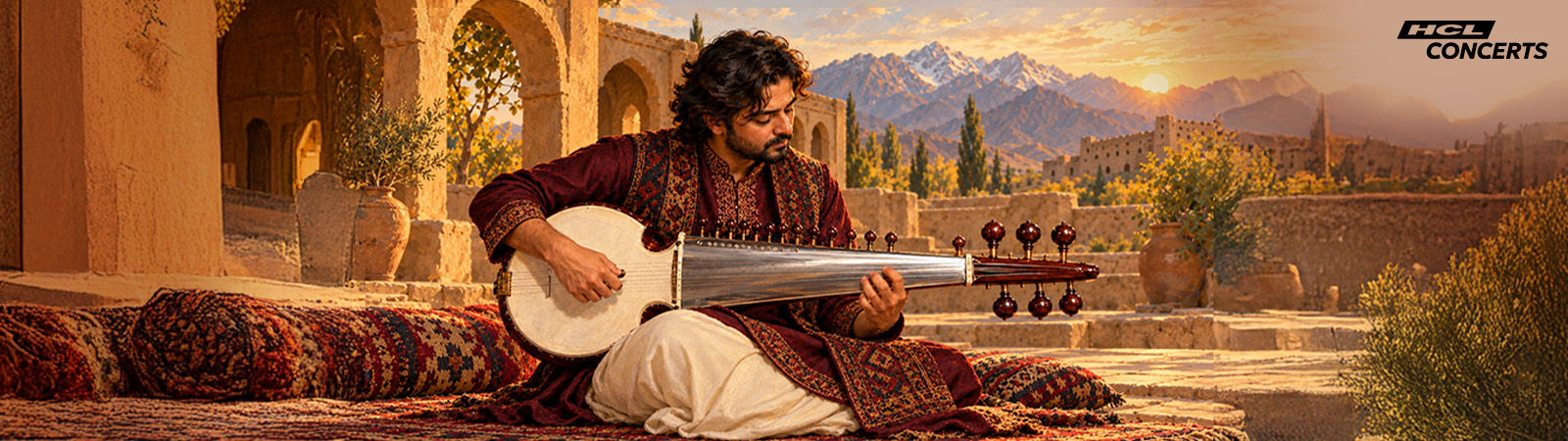
Sarod in Hindustani Classical Music: History, Sound and Playing Technique
2026-10-14How did a folk lute from the hills of Afghanistan become one of the leading instruments of Hindustani classical music? The answer is the sarod – its ancestor, the Afghan rabab, reached North India with Pashtun traders and soldiers in the 18th century. Over the next two hundred years, musicians at the courts of Gwalior, Lucknow, Rampur and Shahjahanpur reworked it. They replaced gut strings with metal, fitted a steel fingerboard, and added sympathetic strings. The goal was: ragas need long, sustained glides, and the rabab could not hold a note long enough to produce them.
India did not simply borrow the instrument; it rebuilt it to suit its own musical language. Today the sarod sits beside the sitar at the top table of North Indian instrumental music, with its own gharanas, its own repertoire and a long line of celebrated sarod players. That line runs from Ustad Allauddin Khan and Ustad Ali Akbar Khan to Ustad Amjad Ali Khan and his sons. Let’s look at where the sarod came from, how it changed, what its strings do, how it is played, and who shaped its sound.
What Is the Sarod?
The sarod is a fretless, plucked string instrument. It has a short neck, a polished metal fingerboard, and a rounded wooden body, usually carved from a single block of teak and covered with goatskin. The name is generally traced to the Persian word for melody or song. With no frets on the neck, the player finds every note by touch and ear. That is the defining feature of the sarod. It allows smooth slides between notes, so the instrument phrases more like a singer than a keyboard.
The History of the Sarod
The history of the sarod is a story of adaptation. A regional folk instrument was reshaped, piece by piece, to meet the demands of raga music.
From Afghan Rabab to Indian Sarod
The Afghan rabab had gut strings, a wooden fingerboard, and a skin-covered body. It suited lively folk tunes well. Families of the Bangash clan brought it to India, and several settled around the princely courts of the north. The most important early figure is Ghulam Ali Khan Bangash, a musician at the Gwalior court in the early nineteenth century. He is widely credited with the first major changes that turned the rabab into the sarod. Around the same period, the Lucknow and Shahjahanpur lineages were developing their own versions.
Another key turning point came at Rampur. Ustad Wazir Khan, a beenkar descended from the Tansen line, taught sarod players a dhrupad-based repertoire. That connection gave the instrument access to the serious, meditative style of the Senia tradition, and it began to be taken seriously as a classical instrument.
The Instrument’s Evolution Across Generations
In the twentieth century, Ustad Allauddin Khan and Ustad Ali Akbar Khan added strings to extend the lower range. Pt. Radhika Mohan Maitra of the Shahjahanpur lineage developed his own design, and Kolkata instrument makers such as Hemen Sen became known for high-quality sarods. The changes came gradually:
- Metal strings replaced gut, providing greater sustain.
- A steel or chrome fingerboard replaced wood so that fingers could glide without friction.
- Sympathetic strings were added beneath the main strings for extra resonance.
- The body and resonance chamber were refined for a deeper, fuller tone.
The Distinct Sound of the Sarod
The sarod’s tone is deep and round, with a slight metallic edge. A plucked note rings and then fades slowly. During that fade, the player can bend the pitch, which gives the instrument its vocal quality. Next to the sitar’s bright buzz, the sarod sounds heavier and more direct.
Sarod Strings: Structure and Tuning
A modern sarod carries between seventeen and twenty-five strings, and each sarod string belongs to one of three groups:
- Main melody strings (usually four): These carry the melody. Common tunings include Ma, Sa, Pa, and Sa, though each gharana has its preferences.
- Chikari strings (usually two or three): Tuned to Sa, these are struck for rhythm and accent, especially in the fast jhala section.
- Tarab or sympathetic strings (eleven to fifteen): These are never plucked directly. They are tuned to the notes of the raga being played and vibrate on their own when those notes sound. Tuning the tarab for each raga takes time before a concert. The result is a faint, shimmering echo behind every phrase.
What Gives Sarod Instrumental Music Its Depth
Three features give sarod instrumental music its richness. The metal fingerboard allows long, smooth slides. The jawa, a plectrum traditionally cut from coconut shell, produces a clean, firm attack. And the long sustain of metal strings means one stroke can carry several gliding notes.
How the Sarod Is Played
The instrument rests across the player’s lap. The left hand stops the strings against the metal fingerboard, and the right hand strikes them with the jawa.
Playing Technique: Meend, Fretless Fingerboard, and the Plectrum
- Meend: It is the glide from one note to another without a break. The player plucks once and slides the finger along the string. This technique makes the sarod sound so close to the human voice.
- Fretless fingerboard: It makes meend possible, but it also makes accuracy difficult. There are no markers. Many players press with the fingernail rather than the fingertip, and a few millimeters of error put a note out of tune.
- Plectrum strokes: These create rhythm – down and up strokes are combined into patterns, and in fast passages the right hand drives the music forward.
Learning Sarod Playing: Training and Discipline
Sarod playing is traditionally taught through the guru-shishya system. Students learn phrase by phrase from a teacher over many years. The early stage focuses on producing a clean, steady tone, which takes longer than most beginners expect. Hardening the nails, building finger strength, and training the ear to hear microtonal accuracy all take patience.
Famous Sarod Players Who Shaped the Tradition
A handful of sarod players did more than anyone to establish the instrument’s reputation.
Ustad Allauddin Khan and the Maihar Gharana
Ustad Allauddin Khan founded the Maihar gharana and trained an extraordinary generation: Ustad Ali Akbar Khan, Pt. Ravi Shankar, Annapurna Devi, and Pt. Nikhil Banerjee. Ustad Ali Akbar Khan later took the sarod to the United States and founded the Ali Akbar College of Music in California.
Amjad Ali Khan and the Modern Sarod Legacy
Padma Vibhushan Ustad Amjad Ali Khan, son of Ustad Haafiz Ali Khan of the Senia Bangash gharana, has performed worldwide and composed for orchestras. His sons, Amaan Ali Bangash and Ayaan Ali Bangash, continue the family tradition.
The Sarod in Contemporary Hindustani Music
Solo sarod recitals still follow the classical structure: alaap, jor, jhala, and a composition with tabla – artists such as Pt. Tejendra Narayan Majumdar keep this format fresh. The sarod also appears in fusion projects, film scores, and orchestral collaborations, and online platforms have made sarod music easy for new listeners to find.
Conclusion
The sarod began as a borrowed instrument and became a defining voice of Hindustani classical music. That kind of story is exactly what HCL Concerts exists to celebrate. It launched Baithak as a series of live virtual performances, and its first episode featured sitarist Shakir Khan of the Etawah Gharana. Alongside Baithak, the platform runs strands including Soundscapes, Tales of Music, and The Raaga Collective. Through concerts, recordings, and stories about artists, HCL Concerts brings instruments like the sarod closer to seasoned listeners and newcomers alike. Tune in to a Baithak, catch a live event, and hear the sarod’s long history in every glide.